
Heat pumps, explained straight.
In our climate, a heat pump works best alongside your gas furnace or boiler. That pairing is called dual fuel, and whether it saves money comes down to local energy prices.
Talk it through at home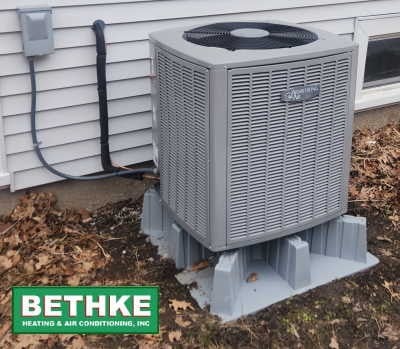
Ducted: dual fuel
If you already have ductwork, a furnace and an outdoor AC unit, a heat pump can take the place of the AC. It cools in summer, then shares the heating with your furnace or boiler down to a certain temperature, typically around 32–40°.
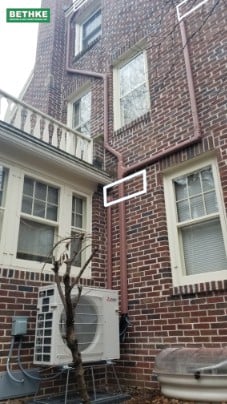
Ductless: split systems
Mitsubishi split-ductless systems go where ductwork can't, including boiler-heated homes and additions. Typically they're more energy efficient than most central air systems, and they suit homes that want separate zones.
When does the heat pump win?
COP is how much heat a heat pump delivers for the electricity it uses. Drag in your rates to see the COP it has to beat.
Break-even COP
4.4
At these prices, a heat pump running above a COP of 4.4 costs less to run than natural gas. Below it, the gas side of a dual fuel system is the cheaper heat.
A rough guide, not a quote. It uses the same arithmetic as our example ($1.00 per therm and $0.15 per kWh break even at a COP of about 4.4) and leaves out furnace efficiency. Propane assumes about twice the cost of natural gas per BTU. The comparison only applies when it's warmer than about 32–40° outside.
Good questions
Still weighing it up?
Give us a call and we'll go through it with you at your home.